Edward Yee
During Pope Leo XIV’s flight press conference last week (02 Dec 2025), he mentioned that a journalist had asked him: “Tell me one book, besides St. Augustine, that we could read to understand who Prevost [Pope Leo XIV] is.” The Pope’s answer is “a book called The Practice of the Presence of God,…a very simple book, by someone who doesn’t even give his last name, Brother Lawrence…If you want to know something about me, that has been my spirituality for many years.” It is interesting to know that this “Brother Lawrence” is, in fact, a Carmelite lay-brother, a retired lame soldier, and a cook working in the monastery kitchen in 17th-century France. It is not my intention here to do a book review (its twenty-odd pages should be easy enough to read). I think it is worth understanding more about Carmelite spirituality, as it has had a strong influence onthe Augustinian Pope’s spirituality.
What is Carmelite Spirituality?
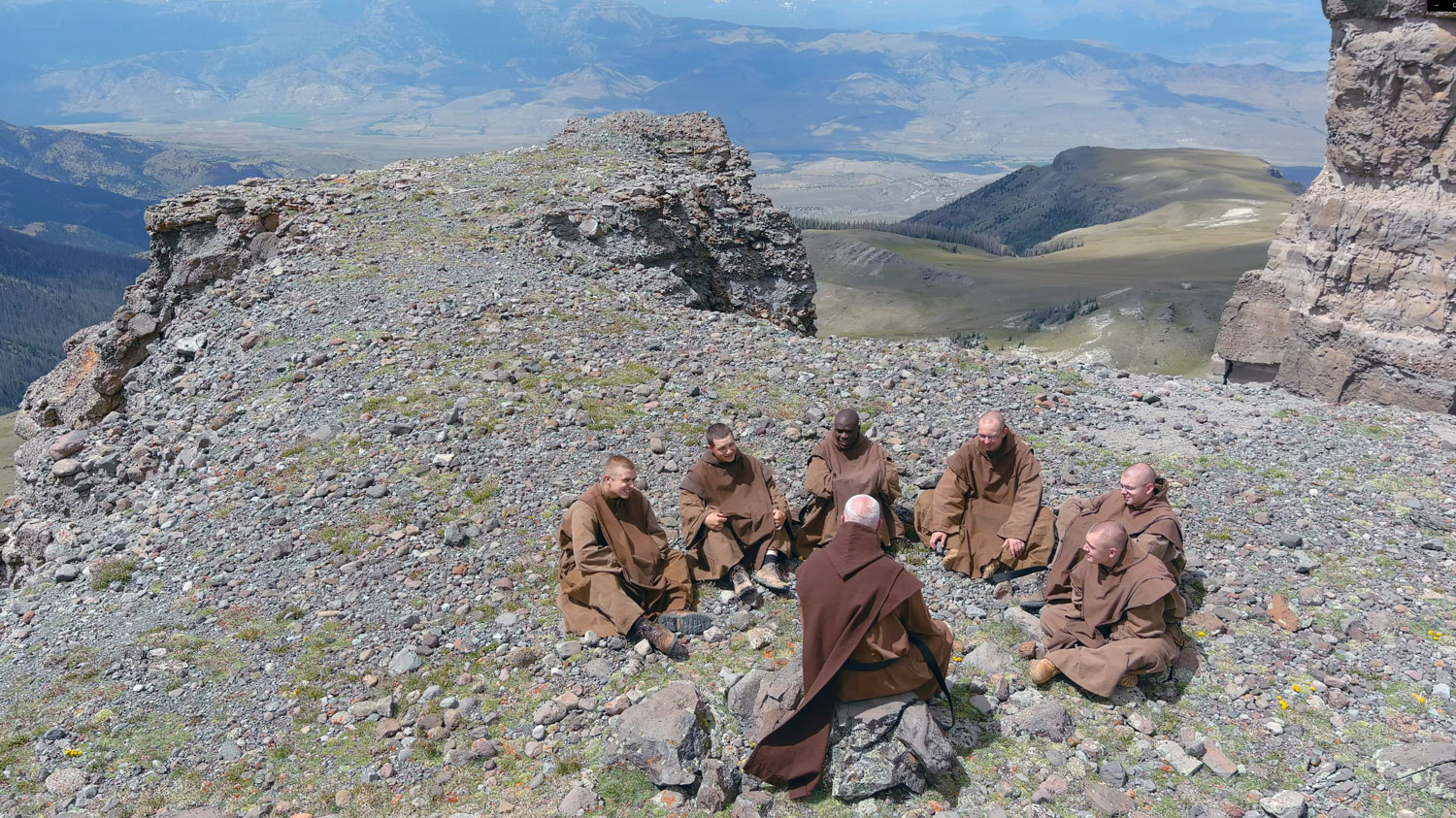
As Prof. Steven Payne, OCD, the Endowed Chair of Carmelite Studies in the Catholic University of America’s Centre for Carmelite Studies, points out, there is “no simple description [of Carmelite spirituality] that can capture all the rich diversity.” (Payne, 2011, pp.xiii-xiv) It has a history spanning over 800 years and can trace its roots back to the Holy Mother and Elijah. Its development throughout the Carmelite heritage has offered different perspectives on the term “Carmelite spirituality.” We are surely familiar with the more recent important Carmelite saints, such as St. Teresa of Avila, St. John of the Cross, St. Therese of Lisieux, and St. Teresa Benedicta of the Cross (Edith Stein). Each of them has offered distinctive doctrines and theological thoughts, such as St. Teresa’s “four waters” and “castle” metaphor, St. John’s “dark night” and “nada”, St. Therese’s “Little Way”, and Edith Stein’s philosophical approach to the Mystery of the Cross. Nonetheless, all these ‘giants’ have their spirituality sourced back to a broader Carmelite eremitic tradition, within the framework of the “formula of life” (formula vitae) and a particular way of living “in allegiance to Jesus Christ” (in obsequio Iesu Christi), from which the Carmelite Rule of St. Albert of Jerusalem of the first half of the thirteenth century has laid down its foundation. (Payne, 2011, p.xxi) Key elements of the Rule include fraternal life, abstinence, clothing oneself in the “armour” of the virtues, work, silence, discretion, solitary prayer “in one’s cell, meditating on the Law of the Lord day and night” (Rule, 10). Due to the Order’s original hermit community on Mount Carmel, their dedication to Mother Mary as the model of vocation, and the spirit of Elijah, Carmelite radical thirst “to taste somewhat in the heart and to experience in the mind the power of the divine presence and the sweetness of heavenly glory, not only after death but already in their mortal life” has been the common characteristic among the famous Carmelite Doctors of the Church, saints, mystics, and ascetics. (Payne, 2011, pp.24-25)
Prayer and Work
While the contemplative way of prayer and the mystical experiences of the Carmelite saints have become attractive and popular, the “action” part of the formula has often been overlooked by many. In fact, Carmelite spirituality calls for a balanced life between meditation and work. We can see the lives of St. Teresa of Avila, St. John of the Cross, St. Therese, and all other great examples of the Carmelite work. St. Teresa herself travelled around Spain on a covered wagon, riding a mule, or on foot, and founded 17 convents throughout her life. St. John collaborated with St Teresa in the reform of the Order and the new foundation of friars in Duruelo and Pastrana, worked as prior and provincial in different cities, teaching as rector of the university college of Alcalá de Henares, building new monasteries, and as confessor and spiritual director for the Discalced Carmelites. St. Therese worked humbly in her convent, serving her aged fellow sisters, ceaselessly desiring the conversion of sinners to save souls and to make Jesus loved. The Carmelite emphasis on work is deeply rooted in its double dimension of charity – the love of God and the love of neighbour – tracing back to the prophet Elijah as the primordial source of charism. Elijah’s hiding and drinking at the brook of Cherith (1 Kgs. 17:2-4) and his encounter with God at Mount Horeb, listening to Him in “a light silent sound” (1 Kgs. 19:9-13) refers to contemplative prayers in solitude, is balanced with Elijah’s work of reviving the Zarephath widow’s son (1 Kgs. 17:7-24) and his courageous fight with the false prophets of Baal and Asherah (18:16-46). The Rule of St. Albert states that “You must give yourselves to work of some kind, so that the devil may always find you busy; no idleness on your part must give him a chance to pierce the defences of your souls…whoever is not willing to work should not be allowed to eat either” (Rule, 20), referring to St. Paul’s letter to the Thessalonia (2 Thess. 3:10).
We can find similar emphasis in St. Teresa’s teaching. Teresa never considers attaining spiritual heights to mean hiding oneself from world affairs. What is striking in her teaching is that the more advanced one is in the road of prayer, the more one can be taken up in one’s service and duty to God, even at the perfect stage of union in spiritual marriage. (See Interior Castle, seventh mansion, 1.8 & 4.6) These are just a few brief examples of the “action” aspect of the Carmelite charism. In a nutshell, Carmelite spirituality views good work as the fruit of meditative prayers, through which God’s will can be communicated to us. Prayer and spirituality are not merely for the benefit of oneself, but for the good of the whole community.
Conclusion: Spirituality is practical
During the same press conference, Pope Leo XIV reflected on how Brother Lawrence had inspired him to trust the Lord in difficult situations and missions—embracing total surrender and allowing Christ to lead the way. The word ‘Practice’ in the book’s title is central: spirituality is about living out Christian faith in daily life, embodying a Christ-centred way of being in a secular world. Through meditative prayer, the Pope cultivates a listening heart, discerning God’s guidance. By following this divine direction, he encounters Christ’s presence amid challenges, deepening his faith and trust in God. This trust, in turn, draws him into a closer relationship with the Lord through continual prayer. Brother Lawrence’s example illustrates that spirituality hinges not on intellectual prowess but on one’s living relationship with Christ. The Pope’s public recommendation affirms that every Christian can enter this transformative cycle of spiritual growth.
 Follow