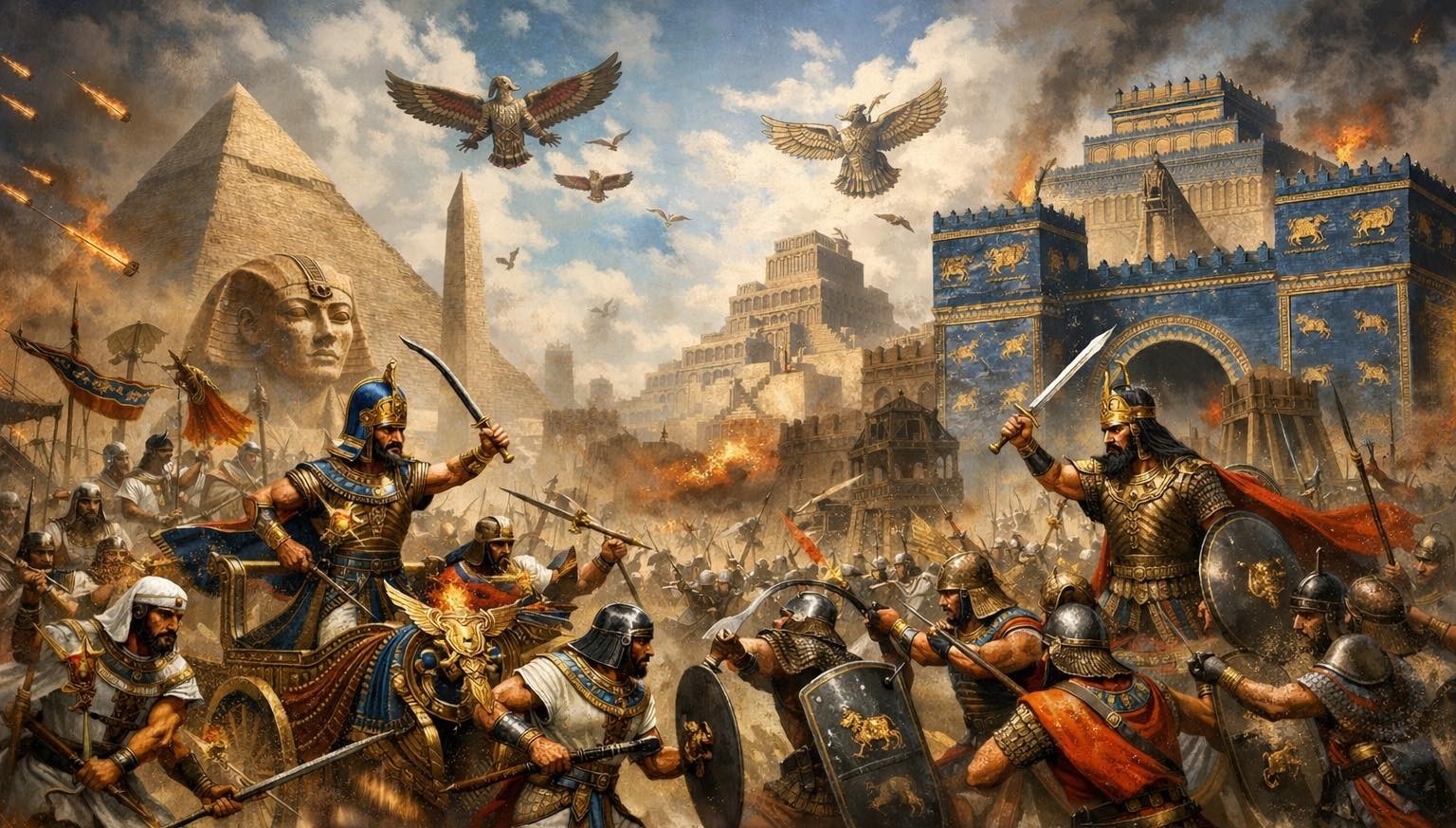
Central to the Jewish faith was the Feast of Passover, the commemoration of God’s deliverance of His people from slavery in Egypt (Exodus 12). In Jesus’ time, Passover was one of three major annual feasts during which the Jews made a pilgrimage to the Temple in Jerusalem. Additionally, the Feast of Weeks celebrated the giving of the Law on Mount Sinai and the first fruits of the harvest (Leviticus 23:15-22), and the Feast of Tabernacles recalled the Israelites’ wandering in the desert and celebrated God’s providence (Leviticus 23:33-43). Recall the first Passover meal. Moses instructed the people to sacrifice an unblemished lamb, mark the doorposts of their homes with its blood, and eat the lamb with unleavened bread and bitter herbs in haste, ready to depart. This act of faith and obedience protected them from the angel of death who passed over the marked houses, sparing the firstborn of Israel, while striking down the firstborn of Egypt. The Passover thus became a perpetual memorial of God’s saving power and His covenantal faithfulness to His people. Because of the Passover, the idea of a sacrificial lamb was intimately familiar to the Jewish people. The Jews were also familiar with the prophecy in Isaiah 53—often referred to as the Suffering Servant—in which the servant of the Lord is described as “a lamb led to the slaughter,” who bears the sins of many (Isaiah 53:7, 10–12). Additionally, each morning and evening, a lamb was sacrificed in the temple as a continual offering for sin (Exodus 29:38–42).
As Jesus began His public ministry, the first thing said of Him came from John the Baptist: “Behold, the Lamb of God, who takes away the sin of the world.” His words would have resonated within the minds and hearts of John’s disciples. His disciples believed that John was a great prophet and the forerunner of the Messiah, sent to prepare the way for the Lord. They saw him as a holy man who called for repentance and renewal, and some even wondered if he himself might be the Christ, though John consistently denied this. Because John’s ministry was one of preparation for the Messiah, his disciples would have anticipated the Messiah’s imminent arrival. Imagine the excitement, surprise, questions, uncertainty, and hope that would have filled their minds and hearts as they listened to John’s prophecy about Jesus. John continued, “He is the one of whom I said, ‘A man is coming after me who ranks ahead of me because he existed before me.’” Though John’s proclamation about Jesus took on a powerful significance for his disciples that first moment that he revealed Jesus as the Lamb of God, John’s words must resonate within each of us today. Now that the Christmas Season is complete and we enter into Ordinary Time, we are invited to embrace Jesus’ public ministry, with all His teachings and Paschal Sacrifice, as something extraordinary in our lives. We must approach His ministry with the same hope, enthusiasm, excitement, and anticipation that John’s disciples experienced.
Reflect today on the moment when John the Baptist’s disciples heard him proclaim, “Behold, the Lamb of God!” Like them, strive to see Jesus with new eyes and hopeful anticipation as we begin Ordinary Time. This liturgical season marks the beginning of Jesus’ public ministry, and it must also be a renewed beginning of His works in your life. Follow Him without reserve, allowing Him to take away your sins and share in His life and love.
Most holy Lamb of God, Who takes away the sins of the world, I choose to follow You, for You are the Messiah, the Son of God. As we enter into Ordinary Time, please give me the grace to embrace Your public ministry in an extraordinary way. May Your working in my life begin anew, transforming me and leading me to the freedom won by Your Paschal Sacrifice. Jesus, I trust in You.
 Follow