Joaquim Magalhães de Castro
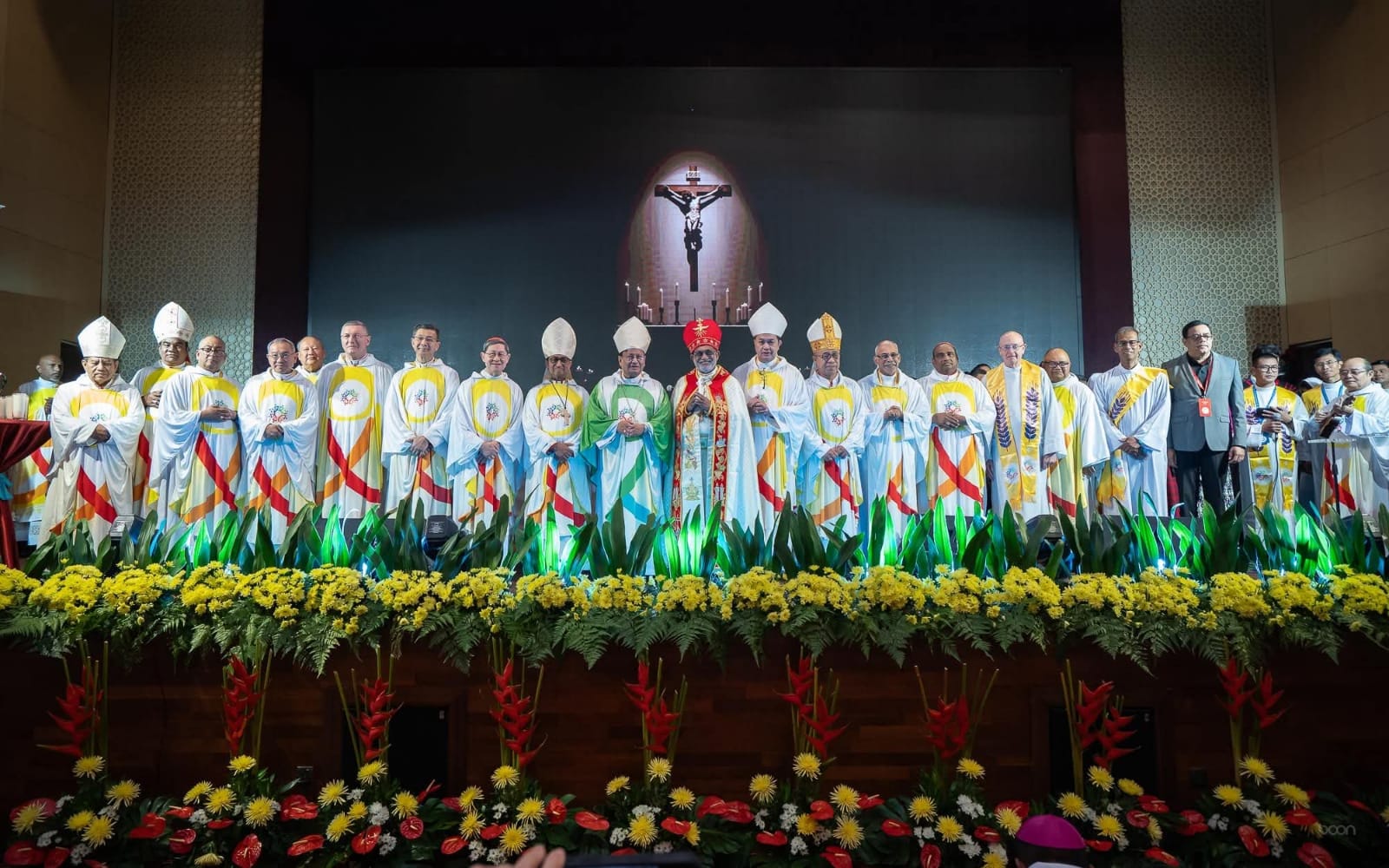
In a spirit of joy and expectation, the Asian Missionary Congress, entitled Great Pilgrimage of Hope 2025, began on November 27 – initiating a Synodal Journey that brings together cardinals, bishops, clergy, religious and lay leaders from all over Asia – and lasted until the 30th.
Guided by the theme “Walking together as peoples of Asia… and they went a different way” (Mt 2:12), this pilgrimage marks a moment of spiritual renewal, dialogue and fraternity.
The organizers — the Federation of Asian Episcopal Conferences and the Catholic Diocese of Penang — conceive the event as a celebration of a great faith expressed in many cultures, promoting a journey of hope and a deeper communion with God, creation and humanity.
The highlight of the first day was the opening address by His Eminence Cardinal Luis Antonio Tagle, Pro-Prefect of the Section for First Evangelization of the Dicastery for Evangelization. In his talk, “Following a Different Path as Renewed Pilgrims of Hope,” he reflected on the story of the Magi as a narrative of hope — “a profoundly human and humanizing virtue.” The beloved Cardinal emphasized that true hope purifies selfishness and concluded by encouraging everyone to be “more like the Magi and less like Herod as synodal partners.”
In total, the event was attended by 10 cardinals, 104 bishops, 155 priests, 8 deacons, 74 nuns, and 422 lay people, in addition to more than 90 volunteers from 23 Asian countries and 9 other nations, demonstrating the remarkable breadth and diversity of participation in this synodal journey.
The “Great Pilgrimage” was described by Radio Veritas as the “largest synodal gathering” of Catholic Churches in Asia in the last twenty years.
The last Asian Missionary Congress was held in 2006 in Chiang Mai, Thailand, making this year’s meeting in Penang a highly anticipated event for the Church throughout the Asian region.
“In all circumstances, we will continue to tell the story of Jesus in Asia and in the world. We will never tire of telling His story,” said Cardinal Luis Antonio Gokim Tagle in his address to more than 1,000 delegates from across Asia.
Cardinal Tagle addressed this “complex interconnection”—between the story of the Three Wise Men and that of Herod within the story of Jesus—to point to the origin and nature of Christian hope.
Christian hope, the Cardinal explained, is not optimism nor “the belief that everything will turn out right.” It is not a pious wish, nor a denial of difficulties, nor an escape from life’s trials. Instead, Christian hope is “a theological virtue inspired in us by the grace of God, and whose object is God. Its object is not something, but someone, namely, God, who became man in Jesus Christ.”
The Pro-Prefect of the Dicastery for Mission also quoted the Catechism of the Catholic Church (paragraph 1818) to remind us that the theological virtue of hope instils in hearts the desire for happiness, sustains people in trials, and purifies devotion to charity from selfish intentions.
“To be true pilgrims of hope,” the Cardinal added, “we must be messengers of the story of Jesus. Through our Christian language, our actions, our relationships, and our very being, we become living stories of hope in Jesus.”
Even today, Cardinal Tagle emphasized, we should therefore consider ourselves fortunate to have “ongoing formation programs in pastoral management that promote transparency and accountability in the administration of goods and property.” But often – he added – “I wonder if we are also taught to be good stewards of the multiple gifts of the Holy Spirit in our communities. Gifts are wasted when they are ignored and not developed. But they are also wasted when they are not used for the purpose for which they were given by the Holy Spirit.”
The Three Wise Men affirmed, through their adoration, that Jesus is God’s gift to all nations, thus witnessing to the open arms of Jesus, the “new King,” who “welcomes all.”
Even today, “in our current world,” the Pro-Prefect of the Missionary Dicastery emphasized, “despair leads to the murder of innocents, children, mothers, and entire villages.” And people without hope are not joyful. “They do not spread joy and do not tolerate joy in others,” Cardinal Tagle stated.
Even at the time of his birth, the Cardinal continued, it was Jesus who “guided the Three Wise Men to follow a different path.” He himself, the Son of God, “followed a different path from that of Herod; he emptied himself to embrace human weakness. He was born king as a poor child in a manger.” At the end of his earthly life, “he was crucified on the charge of being a false king. He continues to live in the hungry, the thirsty, the homeless, the prisoners, the strangers.”
“We need,” concluded the Pro-Prefect of the Dicastery for Mission, addressing the delegates from the churches of Asia, “more wise people, pilgrims who seek, listen, learn and worship. We need fewer Herods, imprisoned in fear, power and despair. Come and join Jesus on his pilgrimage.”
 Follow