Joaquim Magalhães de Castro
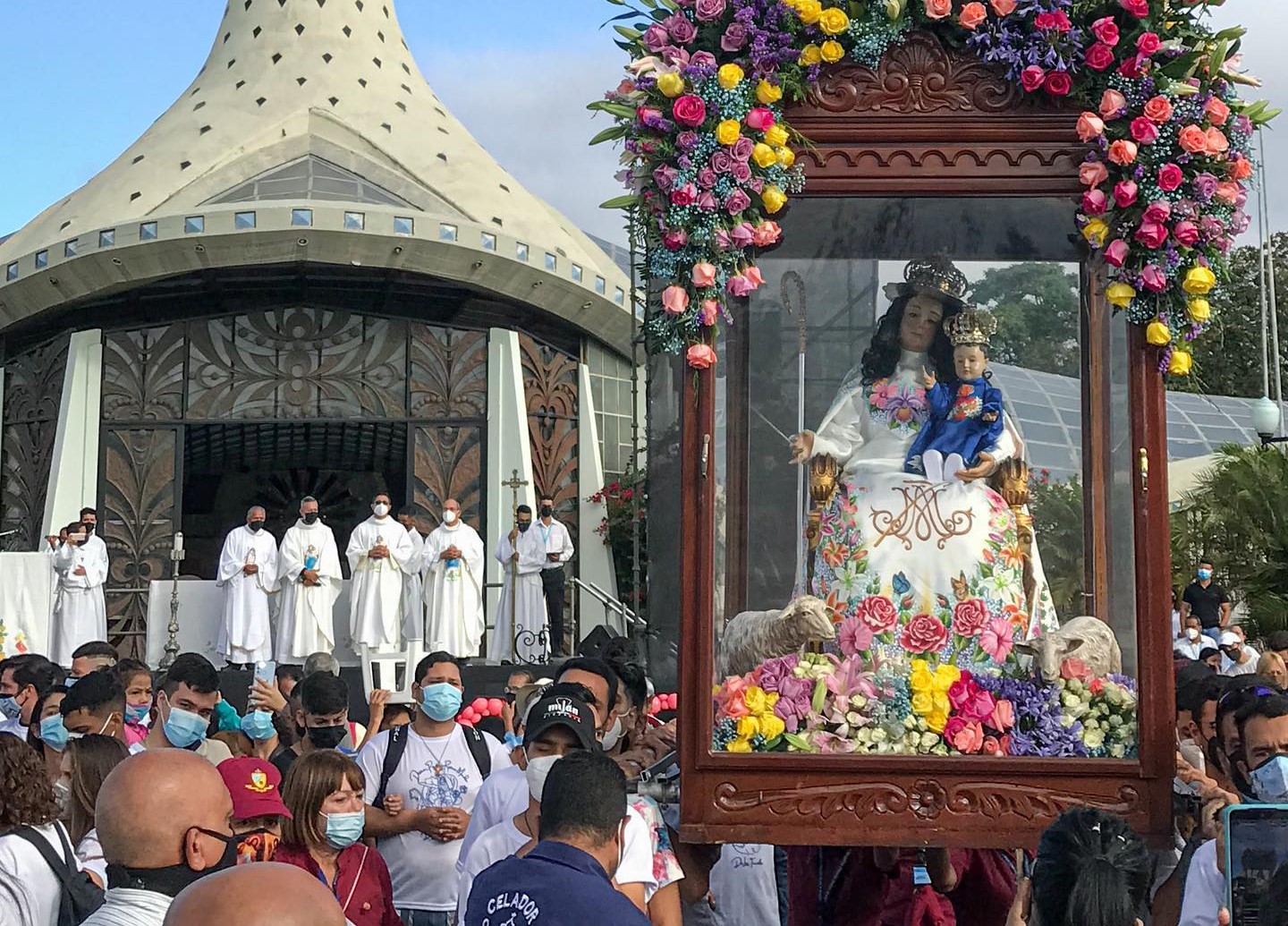
During the Mass celebrated on January 14th in the city of Santa Rosa, on the occasion of the 168th visit of the Divine Shepherdess, one of the most important religious figures in Venezuela, Archbishop Polito Rodríguez Mendez stated the following: “We are called to rebuild a society in which we all participate. The Jubilee Year has ended, but hope has not; on the contrary, it remains alive in our hearts.” The prelate emphasized that January 14th is “a great day for Venezuela,” not only in the region but also nationally, and urged the defense of human dignity and fundamental rights. “We cannot resign ourselves to evil, neither as human beings, nor as Christians, nor to anything that threatens dignity and destroys fundamental human rights.”
The statement released by the Archdiocese of Barquisimeto affirms that Archbishop Rodríguez, referring to the situation in the country, expressed his thoughts for the hostages: “Let us pray for all those who have been deprived of their freedom. We are grateful for the release of some, without forgetting that many others are still imprisoned, and we cannot ignore their cries or those of their families,” he said. According to estimates, around 800 people remain imprisoned in Venezuela for political reasons. He also recalled that, a few days before the arrest of Nicolás Maduro—on January 3rd—Venezuelan authorities released 88 political prisoners, a number that subsequently increased to almost 200. For the archbishop, the completion of these releases constitutes “a gesture of reconciliation and justice” that must be carried out “as quickly as possible.” Rodríguez also addressed those who “were forced to emigrate” in search of better opportunities, entrusting them to the protection of the Divine Shepherdess, and remembered those who suffered from hunger and poverty, pointing to the deep social wounds that led millions of citizens to leave the country in recent years. “Let us invoke a prayer for peace in Venezuela under the protection of our Mother, the Divine Shepherdess, who with her infinite love gathers her entire flock,” he concluded, inviting everyone to overcome the current “wounds” of indifference, fear, and pessimism, and to live with hope. “This commitment calls us to be authentic members of the Church, acting as missionaries of peace for Venezuela and builders of a new society founded on love,” he emphasized.
The devotion to the Divine Shepherdess, as well as the arrival of the image in the country, is shrouded in various stories and versions dating back to 1703, when the cult began to spread in Seville, Spain, and then crossed borders, arriving in Venezuela in 1713 with the Capuchin friars. However, another version claims that the image arrived in 1740. At that time, the parish priest of the city of Santa Rosa commissioned a statue of the Immaculate Conception from a Spanish sculptor. Unexpectedly, the figure delivered was that of the Divine Shepherdess. The priest wanted to return it, but the packaging box could not be lifted, and the local residents interpreted this as a sign that the statue should remain in Santa Rosa.
It is said that the Capuchin friar Frei Isidoro de Sevilla was participating in the festivities of Saint John the Baptist in 1703. During a procession, at the end of it, he had a dream vision in which the Virgin Mary appeared to him in a rural landscape, surrounded by trees and sheep. Moved by the beauty of the image, he went to the workshop of Alonso Miguel de Tovar, a famous painter of the time, and asked him to paint the image he had seen in his dream. Months later, the painted image was carried in procession for the first time, departing from the Church of San Gil and traversing the streets of Seville. While the faithful prayed the rosary, the image received the title of Divine Shepherdess, thus beginning this Marian devotion. It is said that, years later, the sculptor Francisco Ruiz Gijón sculpted a life-size image of the Divine Shepherdess.
In 1703, the Capuchin Missions arrived in Venezuela with several religious images, and according to history, one of them was probably that of the Divine Shepherdess. More than six decades later, the Church of Santa Rosa became the Sanctuary of the Virgin. The promoter of the veneration of this image was Father Sebastián Bernal, who dedicated his entire priestly life to fostering this devotion, initially celebrated on September 8th. Appeals for wisdom and unity among the people, intertwined with words of spiritual support. This is the tone of the messages addressed in recent hours to the people of Venezuela by Venezuelan Catholic bishops and the presidency of CELAM (Latin American and Caribbean Episcopal Council), following the US military intervention. The Catholic Episcopal Conference of Venezuela, through its official Instagram account, released a message expressing its solidarity with the victims of the US operation – at least eighty people, including military personnel and civilians, according to sources.
The Venezuelan bishops, who are reliable sources of information from local and international media, are inviting everyone to pray for the preservation of the country’s unity. “In light of the events unfolding in our country today,” wrote the Venezuelan bishops, “we ask God to grant all Venezuelans serenity, wisdom, and strength. We express our solidarity with the injured and the families of the deceased. Let us persevere in prayer for the unity of our people.”
 Follow