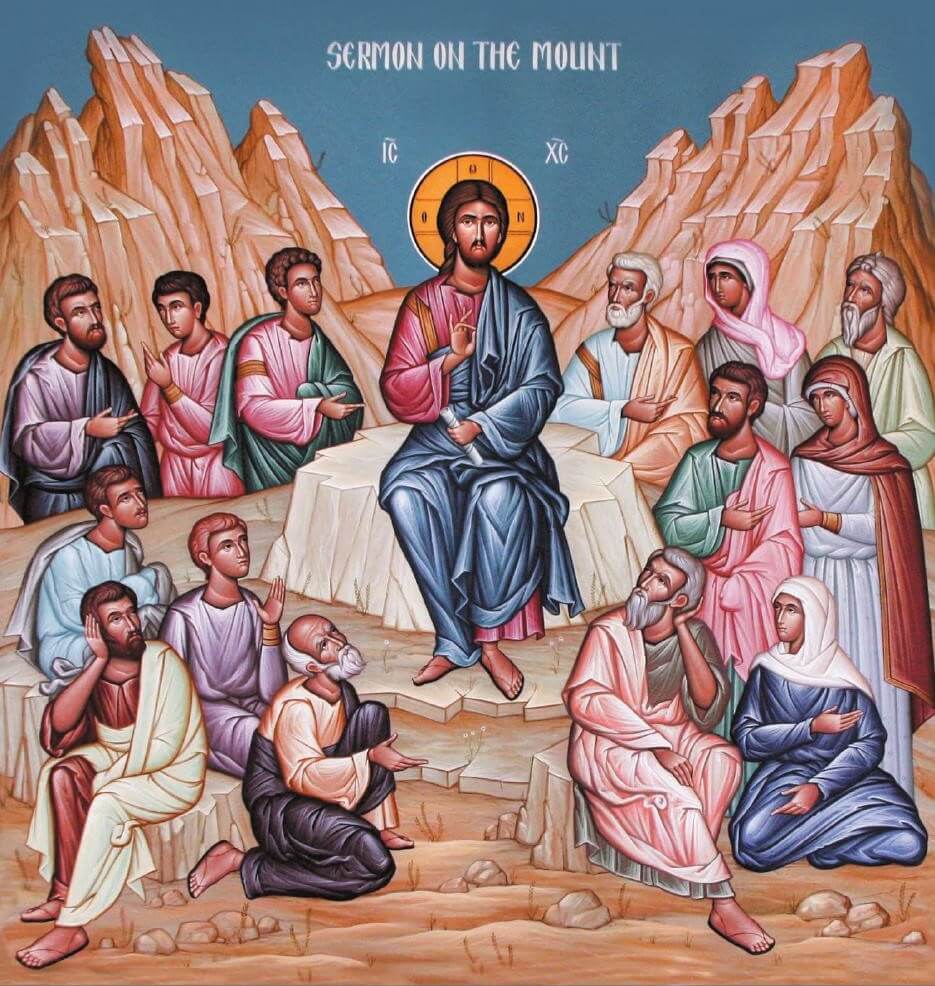
The Beatitudes call us to the heights of morality and holiness. Those who live according to these divine precepts are blessed beyond measure. The promises to those who live this high calling are great: They become children of God and inherit the Kingdom of Heaven. Furthermore, they receive comfort, satisfaction, mercy, purity, and peace. Though the rewards are great, so are the requirements: spiritual poverty, holy sorrow, meekness, longing for righteousness, a merciful heart, purity, peacemaking, and patient endurance during persecution. The Beatitudes reveal the culmination of God’s moral teaching and the highest revelation of the Christian life. To fully appreciate their significance, it is helpful to understand the history of moral revelation. Doing so is more than a history lesson on God’s deepening revelation, it also reveals the path for our spiritual journey toward perfection. Morality begins with the Natural Law—the innate understanding of right and wrong written on the human heart. This Law is from God and is often described as living in accord with right reason or common sense. All people have access to this moral law within their own consciences, enabling them to recognize God as the Creator, honor Him, respect human dignity and the common good, and refrain from acts such as murder, theft, and deception. Though universally present in all people, sin and our fallen human nature cloud our ability to clearly see and follow that law.
In the Old Testament, God slowly revealed Himself and called His people to greater holiness and moral living by adding to the Natural Law through revelation. From Abraham and his descendants, God raised up Moses through whom He revealed the Ten Commandments—a concise moral code rooted in Natural Law but explicitly revealed by God that called His chosen people to right worship, justice, and love for one’s neighbor. Through the prophets—such as Isaiah, Jeremiah, and Ezekiel—God called Israel to move beyond mere external observance of the law to an interior conversion of heart. Isaiah emphasized the virtues of justice and mercy, Jeremiah prophesied a new covenant in which God’s law would be written on the hearts of His people, and Ezekiel promised that God would give His people a new heart and a new spirit, enabling them to follow His statutes. The wisdom literature—Psalms, Proverbs, Ecclesiastes, Wisdom, Sirach—deepened the understanding of moral life by revealing moral gifts, such as the Fear of the Lord, the blessedness of righteousness, and the call to trust in God’s providence and live a virtuous life.
The Beatitudes elevate all laws of the Old Covenant. Jesus not only calls us to profound holiness, He also provides the means to achieve it through His Sacrifice, transmitted through the grace of the Sacraments. To live the Beatitudes is to live in imitation of Christ, who perfectly embodied all virtues in His life, Passion, and Resurrection. Hence, the Beatitudes are not only a moral code we must follow, they are a participation in and union with the Son of God, Who lived the Beatitudes to perfection.
As we ponder the Beatitudes, reflect today on their high and glorious calling, as well as their rewards. Sometimes, reading the Beatitudes can leave us discouraged, as we are aware of how far we are away from perfecting them. Dispel discouragement and know that these new divine precepts are attainable by grace. Set your eyes on the heights of perfection and open yourself to the abundant grace offered. Doing so will not only result in glorious spiritual rewards in this life, it will also result in the greatest eternal rewards in Heaven.
Used with permission. www.mycatholic.life
 Follow