Fr. Eduardo Emilio Agüero, SCJ
Introduction: Peace and Instruction After Trial
“Why do you cry aloud, [Daughter of Zion]? Is there no king in you? Has your counselor perished, that pangs have seized you like a woman in labor?” (Mic 4:9)
This imagery shows that God’s salvation is a painful process of purification, unlike the nationalist fanaticism of false prophets (Micah 3:11). In the midst of suffering, Israel is called to trust in the Lord. This trial may refer to the destruction of Judah’s cities and the siege of Jerusalem by the Assyrian king Sennacherib in 701 B.C. (cf. 2 Kings 18:13–19:37). After three chapters of judgment, Micah 4 and 5 announce the exaltation of Daughter Jerusalem – a figure of the Church – and her King, Christ the Messiah. The link between judgment and salvation is expressed in this verse: “In the days to come, the mountain of the Lord’s temple shall be set over the highest mountains and will tower over the hills” (Micah 4:1).Jerusalem will be lifted up, and her honor restored. All nations will stream to her and receive instruction (Micah 4:2). Weapons will be transformed into tools for agriculture, and wars will cease (Micah 4:3; Isaiah 2:1–5).
The Humble Ruler from Bethlehem
“But you, Bethlehem-Ephrathah, least among the clans of Judah, from you shall come
forth for me one who is to be ruler in Israel; Whose origin is from of old, from ancient times.” (Mic 5:1) A new ruler or judge (shaphat) will arise from the small and humble Bethlehem. He will have the authority to bring peace and defend the people from the Assyrians. He will feed his flock like a shepherd. Yet he will face hostility: “Now grieve, O grieving daughter! “They have laid siege against us!” With the rod they strike on the cheek the ruler of Israel.” (Mic 4:14)This attack on the king is an act of public shaming that affects the whole people. This verse connects with Jesus being beaten: “One of the guards standing there gave Jesus a blow on the face…” (Jn 18:22).In times of trial, when enemies attack and destroy, the just person can only rely on the Lord and continue to hope in His justice: “But as for me, I will look to the LORD; I will wait for the God of my salvation; my God will hear me.” (Mic 7:7). After this ruler-judge endures suffering, he shall prevail: “He will stand and shepherd his flock with the strength of the Lord.” (Mic 5:3).
A Humble Beginning
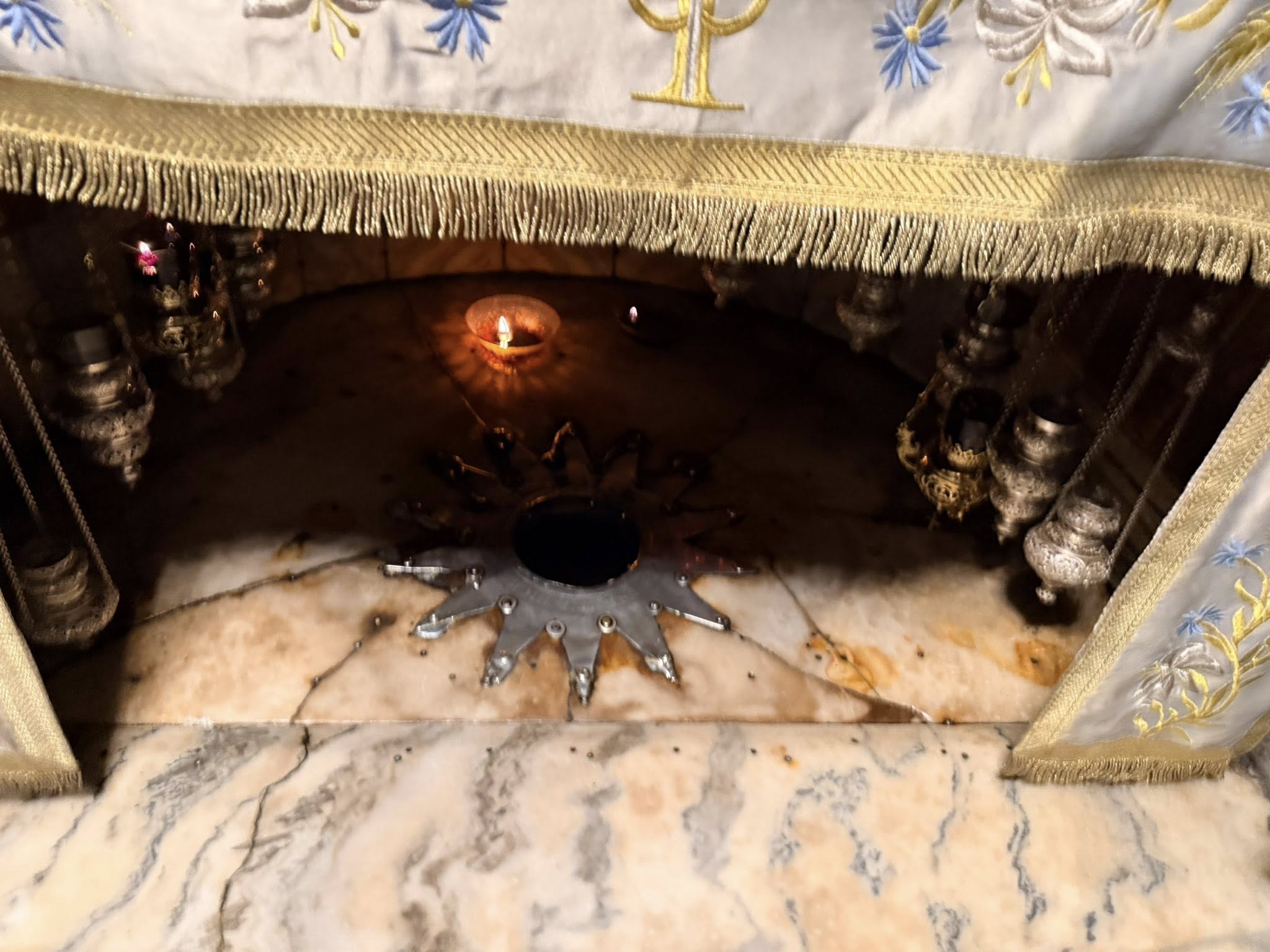
Bethlehem of Ephrathah, the birthplace of King David, will also be the place where the Messiah is born, fulfilling God’s covenant with David’s house (2 Samuel 7:1–17). The Gospel of Matthew announces the fulfilment of this prophecy with the birth of Jesus in Bethlehem (Mt 2:6).
Among the prophetic texts, Bethlehem is mentioned only here and in Jeremiah 41:17. Though insignificant, it becomes the source of a ruler whose origin is “from of old,” echoing Isaiah’s prophecy of the stump of Jesse, David’s father. This transformation—from the least to the greatest—reveals God’s way of working in the world: “God chooses the weak to confound the strong” (1 Cor 1:27). Like Isaiah 11:1, which speaks of Jesse rather than David, Micah’s reference to Bethlehem recalls the monarchy’s humble beginnings and David’s image as a shepherd rather than a warrior. In this way, Bethlehem embodies simplicity and humility, standing in deliberate contrast to the great city of Jerusalem. Jerusalem represents the splendor and power of David and Solomon’s kingdom, yet the Lord chooses Bethlehem—the small, unassuming town—as the place where the new King will arise; God’s work of salvation begins not in human grandeur but in humility and littleness. To return to Jesse is to embrace a new beginning: a renewal rooted not in worldly strength, but in the simplicity of faith and the shepherd’s heart.
The Shepherd King
A new beginning is announced in humble Bethlehem. The birth of the Lord Jesus in a manger is a concrete historical event, occurring at a specific time: “When she who is to give birth has borne, then the rest of his kindred shall return to the children of Israel” (Mic 5:2). At the birth of this new King, the scattered remnant will return. The Lord who once dispersed them will gather them again (Mic 2:12–13). He will shepherd Israel (cf. 2 Sam 5:2), and His reign will extend peace to all nations. Matthew cites this prophecy in connection with the Epiphany, when the divine Child is revealed to the Gentiles (Mt 2:6). Jerusalem, the capital city, recalls the power and splendor of David and Solomon’s reigns; Bethlehem, by contrast, is small and humble, yet it is precisely this simplicity that God chooses as the place where renewal begins; From Bethlehem arises the new King, who will be exalted throughout the earth (Mic 5:3). History itself is the arena where the Lord comes to save us. Before the Messiah’s arrival, Israel was purified through trials and suffering, like a woman in labor. The King who comes suffers violence and humiliation, yet He establishes peace, consoles the afflicted, and reunites the dispersed tribes. He protects his people from the threat of the invader: “He will deliver us from the Assyrians when they come into our land” (Mic 5:5). This messianic text finds its fulfillment in Jesus of Nazareth, born of the Virgin Mary. He endured shame and suffering, conquered our enemies, and opened the way to peace. Through Him, all nations are invited to ascend the Lord’s mountain, to learn His ways, and to share in His communion. It is a prophetic vision of universal salvation, where covenant blessings overflow beyond Israel to embrace all peoples.
Praying with the Word of God
Returning Home
Read and meditate on Micah 4:14–5:5. The prophet invites us to simplicity and humility, returning to the beginnings of our faith journey. This text allows us to recall our littleness and poverty, and to recognize the Lord’s power transforming us from within, liberating us from our enemies. Do I find God’s strength in my own weakness?
Trust in the Lord in the Midst of Trials
This transformation is often painful; it frees us from vices and evil tendencies while allowing us to grow in virtues, thus leading us to peace and communion with God, with others, and with creation. Like a woman in labor, we are called to remain faithful and to hope in the new life the Lord will bestow upon us. In the midst of trials, Micah encourages us to trust in the Lord, who comes to save us. What are the enemies the Lord has liberated me from?
Contemplating Christ
Jesus, the Messiah, endured suffering and shame while confronting our enemies. Contemplate Christ humiliated on the Cross—the altar where He won victory over death, sin, and Satan. In prayer, place your struggles before Him, trusting that His strength will bring renewal and peace. Where in my own history do I need to discover the Lord’s presence?
 Follow